Alternate Logos Explained : Why they need to be part of your brand identity

Note: Blog post originally published November 2016. Updated August 2020
Brand identity and websites go hand in hand - you'd be hard pressed to find a quality designer/developer who doesn't take your business' brand into account when building your website. That would be madness!
When it comes to branding, right off the bat people think of three things:
But as I'm sure you've come to realize, branding is much more involved than just those three elements. Yes, they are often the pillars of a good brand but they are only a small part of brand identity.
In today's article, we're going to explore the lesser-known Alternate Logo and see how it incorporates into your brand identity. We'll also look at examples of when and why alternate logos are used, and how that relates to your website.
Related:
Here’s what you need to know about alternate logos
Click play on the video above or watch in over on Youtube
Logo Formats
Before we dive into our oh-so-serious-study of alternate logos, let's begin by addressing that they are ONE type of logo but not the only format out there.
Primary Logo
When people hear the word "logo", they usually just think of one version of a logo - known as the primary logo. The primary logo is what's used in most circumstances and is easily recognizable and the most familiar. Therefore, you can think of the primary logo as the official stamp of your brand. The primary logo allows you to represent your business visually in more of a corporate way and is totally fine to use when you want to be sales-y or official.
Alternate Logo
A primary logo is mandatory but a good designer will also provide clients with an alternate logo. Depending on the circumstance, they'll need to use that version of the logo instead (more info on this below) so having the two options is a must.
Alternate logos are a very important part of the overall branding package. Not only do they keep the brand identity fresh and cohesive, they also give you options and variety with your design elements. They're also a great way to make your mark as a brand less formally since the alternate logo can be used more discreetly.
Example of a primary & alternate logo
Here's an example of so that you can see the difference between a primary and alternate logo. I'm originally from Toronto (shoutout to the 6ix!) so I'm going to use my beloved Blue Jays as an example.

Toronto Blue Jays Primary Logo
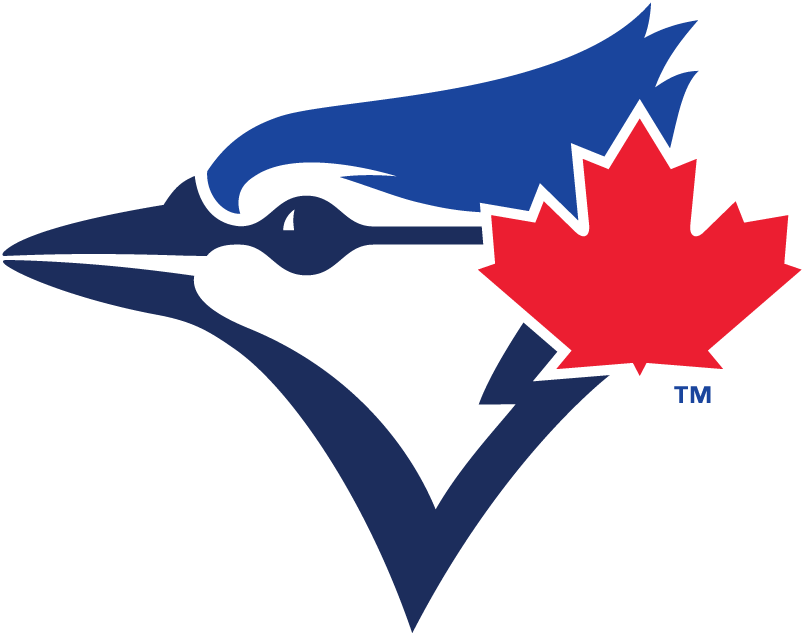
Toronto Blue Jays Alternate Logo
When comparing the two logo options, it's clear that the primary logo has more elements (e.g., circle outline, text, red baseball in the background) whereas the secondary logo is simpler and less involved.
Another example comes from Dapper Fox Designs (that I found via a Pinterest search for Alternate Logos). First off we have the primary logo:

Jupiter Mountain Primary Logo - Dapper Fox Designs
This primary logo is beautiful and combines several design elements with a few lines of text. However, since it is quite wide and tall, it might not be the best fit to use in all circumstances.
This brings us to the alternate logos:

Jupiter Mountain Alternate Logos
Depending on the situation, it might make more sense to use the simple text-focused logo version, or else embrace the circular design version. Both are lovely examples of alternate logos that can be used in different situations which still support the overall brand identity.
When should you use the alternate logo?
Most of the time, you'll stick to the primary logo.
However, there will be times when it makes more sense to use the alternate logo instead. Let's take a look at those circumstances and talk more about why we have to make that design choice.
Visualization
Alternate logos are perfect to use in situations where you want to focus on visibility and you want people to be able to actually read or notice your logo. In some cases, a simpler, more paired-down version of the logo is a better fit that the detailed primary logo.
There will be times when your target viewer might not have enough time to read the entire primary logo with all it's wording. An example of this could be a billboard on the side of the road, a sign in a parade, or a poster on the side of a bus. In these cases, you might use the alternate logo since it's still recognizable but doesn't slow the viewer down by forcing them to speed-read the tiny text.
Reproducing the logo
There will be times when you'll have to reproduce the logo in different forms and you may come across times when technical limitations prohibit the primary logo from being accurately reproduced. For example, if you're a team like the blue jays and you're making a scarf to sell to fans, it might be too hard to get "Toronto Blue Jays" written out in the fabric so instead, you'd just use the alternate logo that doesn't include those letters. This is a common concern when using textiles where the logo is not ironed on.
Adapts to design constraints
This is a big one and is one of the most common reasons you'll use the alternate logo!
Often times the primary logo will be designed in a horizontal format. However, there will be times when you'll need to use a version of the logo that is better suited for a vertical or narrow position. It would be super hard to reformat the horizontal primary logo to fit a vertical space so in this case, it's better to just use the alternate logo that looks good in a vertical / square space and doesn't need to be reformatted.
If the design or layout necessitates something specific that goes against what the primary logo performs best in, this is a case when you'll use the alternate logo instead.
Small spaces
Another reason why you'd use the alternate logo is that the space is small and the primary logo would get "lost"/wouldn't fit. In a small space, the primary logo might be illegible (especially if you have text in your logo) so it's a great idea to have an alternate logo that accommodates those small spaces.
An example of this on your website could be the favicon.
Don't be afraid to use alternate logos
It's important to remember that while you will probably use the primary logo in most cases, the alternate logo isn't something to shy away from. It is still a very cohesive design element that is aligned with your overall brand identity!
Yes, it's true that the alternate logo is used on more of an as-needed basis but that doesn't mean it should be left forgotten in a DropBox file somewhere, never to see the light of day.
When in doubt about the effectiveness or format of the primary logo, consider using the alternate logo instead - you won't regret it!
Create and design an alternate logo
In most cases, your designer will provide you with both a primary and alternate logo as part of your branding package.
However, if you’re going the DIY route then you’re responsible for designing both options for yourself. In this case, I strongly recommend you use Canva because they have so many amazing resources to help you with this process! Seriously, I can’t recommend Canva enough if you’re taking the design challenge on yourself.

Check out Canva’s logo resources here.
Final thoughts
Now it's your turn to tell me about your familiarity or experience with alternate logos. Do you have one as part of your design identity? Have you ever used the alternate logo on your website or in marketing materials? Have you designed your own out of necessity? Why or why not? I'd love to know so leave me a note in the comments!
When in doubt, browse Canva’s logo resources for inspiration or hit up your designer for a logo variation! It’ll set your brand and website apart :)




News flash : there’s a global pandemic going on 😷
At this point, we’re several weeks in and the initial shock over COVID-19 has passed… but now we’re faced with this “new normal” situation and everyone’s doing their best to figure out how to make the most of it. We don’t want to just keep our heads above water - nope, we want to THRIVE during the madness!
This pandemic has brought about a total upheaval of day to day life, as well as business. Literally EVERYTHING has changed - we’re all staying at home, many people are working from home for the first time ever, social distancing is mandatory, and we likely haven’t seen our loved ones IRL in a long time.
Politicians are delivering daily updates that often make our heads spin. Breaking news from the WHO is now required reading. Government alerts are popping off. Our phones are blowing up with notifications of Insta Lives. It’s wild.
We’ve also seen a complete disruption of digital behaviour and the craziest thing is that it pretty much happened over night back in mid-March 2020! People are glued to their screens (phones, laptops, TVs, etc.) and we’re spending more time than ever online …. but not always in the ways that you might expect.
This situation means different things for different people, brands and businesses - and yes, that means your website and it’s traffic are going to look different from what you’re used to.
For some industries, this global pandemic has been a blessing and business is better than ever - Amazon, Netflix and Zoom are booming and stacking mad cash right now.
However, many other industries & niches have taken a major hit. A change in consumer habits has a direct impact on website traffic, organic online searches and even businesses’ bottom lines.
This is particularly true for North American or European-based websites, brands & businesses.
You might have unexpectedly found yourself in this unfortunate situation and maybe you’re freaking out that your website traffic has DROPPED and your business is suffering. If you have, that sucks and I’m truly sorry…. but rest assured that it’s not all doom and gloom! I’m here to help you out as best as I can and reassure you that it won’t be this way forever.
In this blog post, we’re going to go over what to do if your website’s traffic has dropped or taken a hit because of COVID-19.
Whether you’re an independent content creator/blogger, a small business or brand, or a bigger company, I want you to take a step back and look at this drop in traffic & business with clear eyes and your head on straight.
After you’ve read this post, I want you to feel like you have a plan and actionable steps that you can follow to improve your situation, and hopefully boost your website traffic and set your business up for future success.